

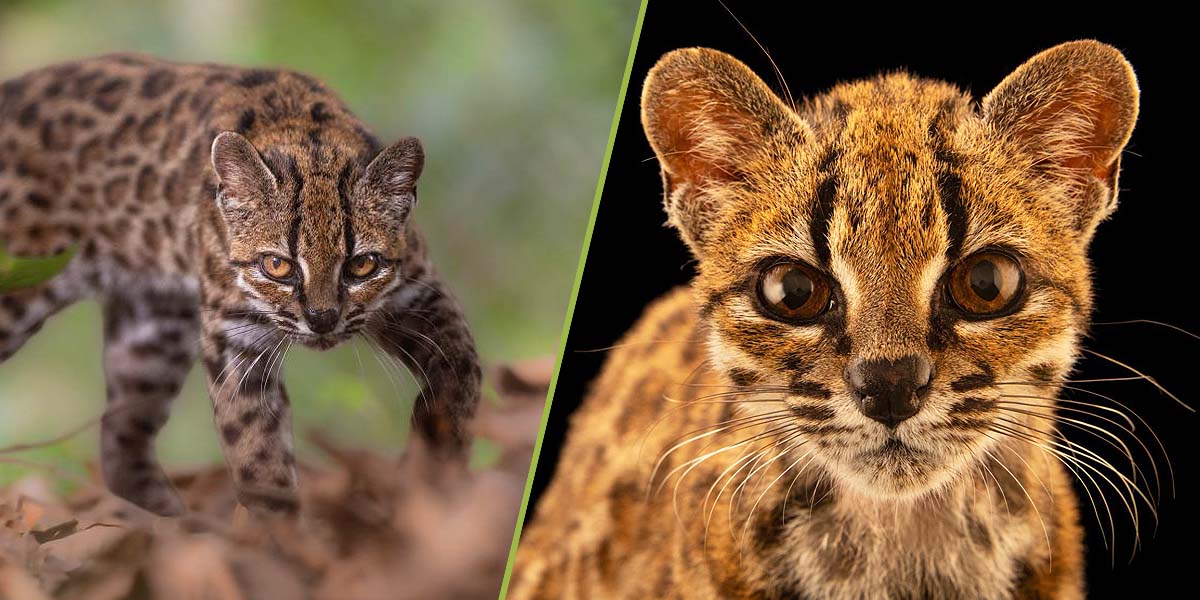
Can you imagine rescuing what you think is a tiny kitten lost in the woods, and then finding out it’s a previously undiscovered animal? The internet is a-buzz with the story of this newly identified species of tiger cat.
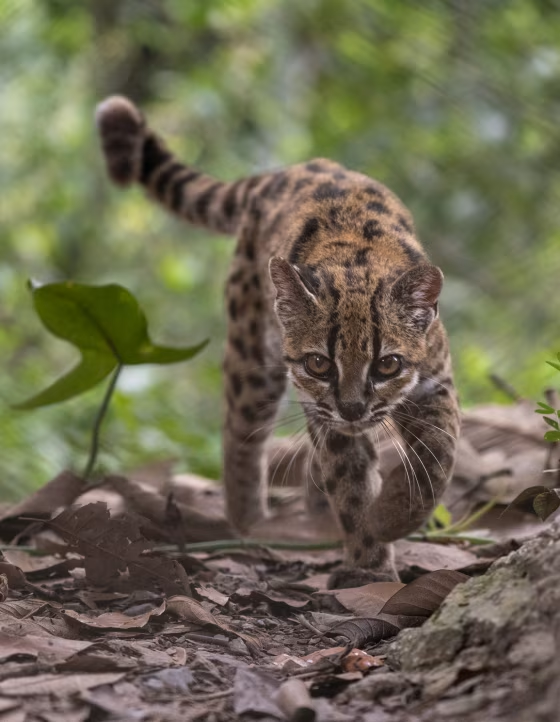
Fernando Faciole for National Geographic
Lucky Find
When a Bolivian man rescued a kitten from the side of the road near the cloud forest in 2016, he thought it was a lost house cat. Over several months, he realized it was something more. A wild animal, not a house cat at all. So he gave the wildcat to a local rescue organization, Senda Verde—Wildlife Sanctuary. They nicknamed the tiger cat Tigrino.
The sanctuary contacted Paola Nogales-Ascarrunz, a biologist and National Geographic explorer working in Bolivia, because they weren’t sure exactly what this “weird cat” was. Paola visited Senda Verde and realized she didn’t know exactly what it was either.
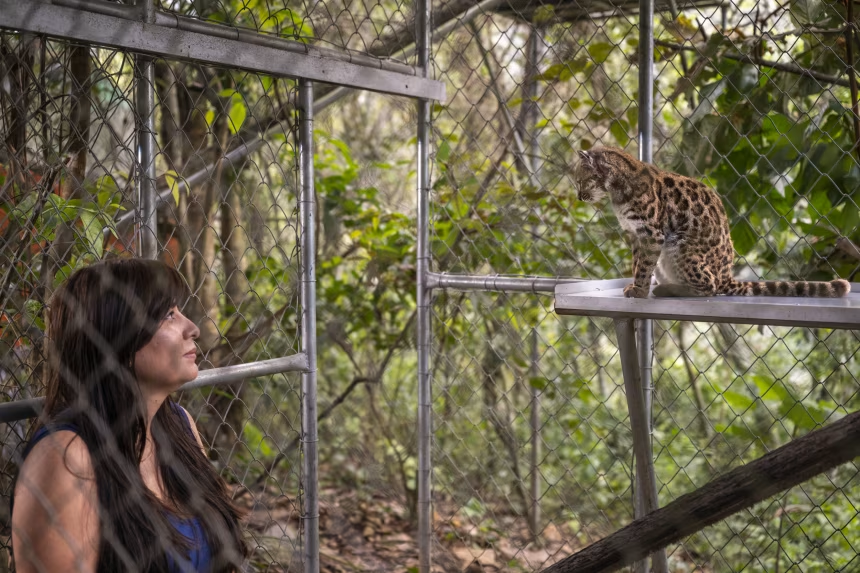
Paola Nogales-Ascarrunz with the Leopardus tilcayo at Senda Verde–Wildlife Sanctuary in Bolivia. Fernando Faciole, National Geographic
While the tiny cat looked like certain known species, there were slight differences in size and marking that made Nogales-Ascarrunz curious.
Scientists Discover the Truth
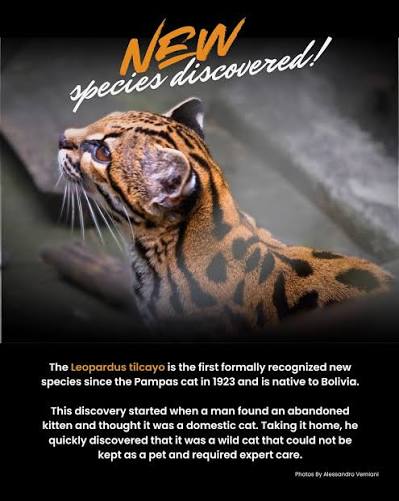
It would take a few years of research and DNA analysis from a team of scientists to uncover that Tigrino was a totally unique branch on his feline family tree. This little cat became the first new felid (cat species) to be discovered in over 100 years!
Even more, this study on Tigrino busted open all kinds of subspecies in already known cats, like the margay.
Discovering new mammal species isn’t that rare. About 65 a year are added to the list. But most of those are splitting already known animals into two distinct species.
Not so for this tiger cat. He was completely new to scientists!
Adorable Tigrino
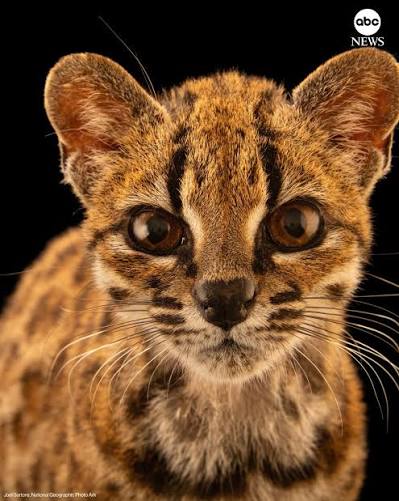
From Instagram account of ABC News, Joel Sartore #photoark
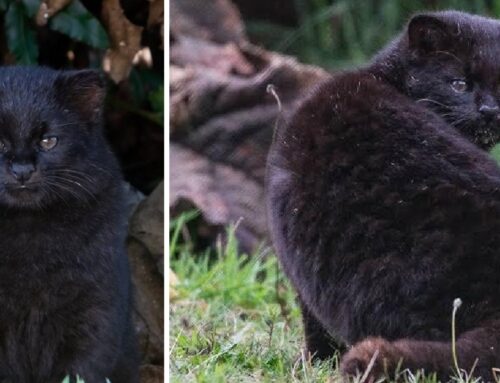
This tiger cat named Tigrino, now 10 years old, is only 18 inches from his head to the end of his body, and weighs 3 pounds. So tiny! He has a small, scrunched-up face, short and round ears, leopard-like spots, and a black nose.
When Paola Nogales-Ascarrunz began talking to people near the Bolivian Yungas, the cloud forest where the Andes mountains meet the Amazon basin, she discovered this tiger cat species was new to scientists but not to the locals. They all knew about it. They called this wildcat tilcayo. There didn’t seem to be any specific meaning for that name in the regional languages. But that distinction was still used when naming this species officially as Leopardus tilcayo, respecting the local tradition.
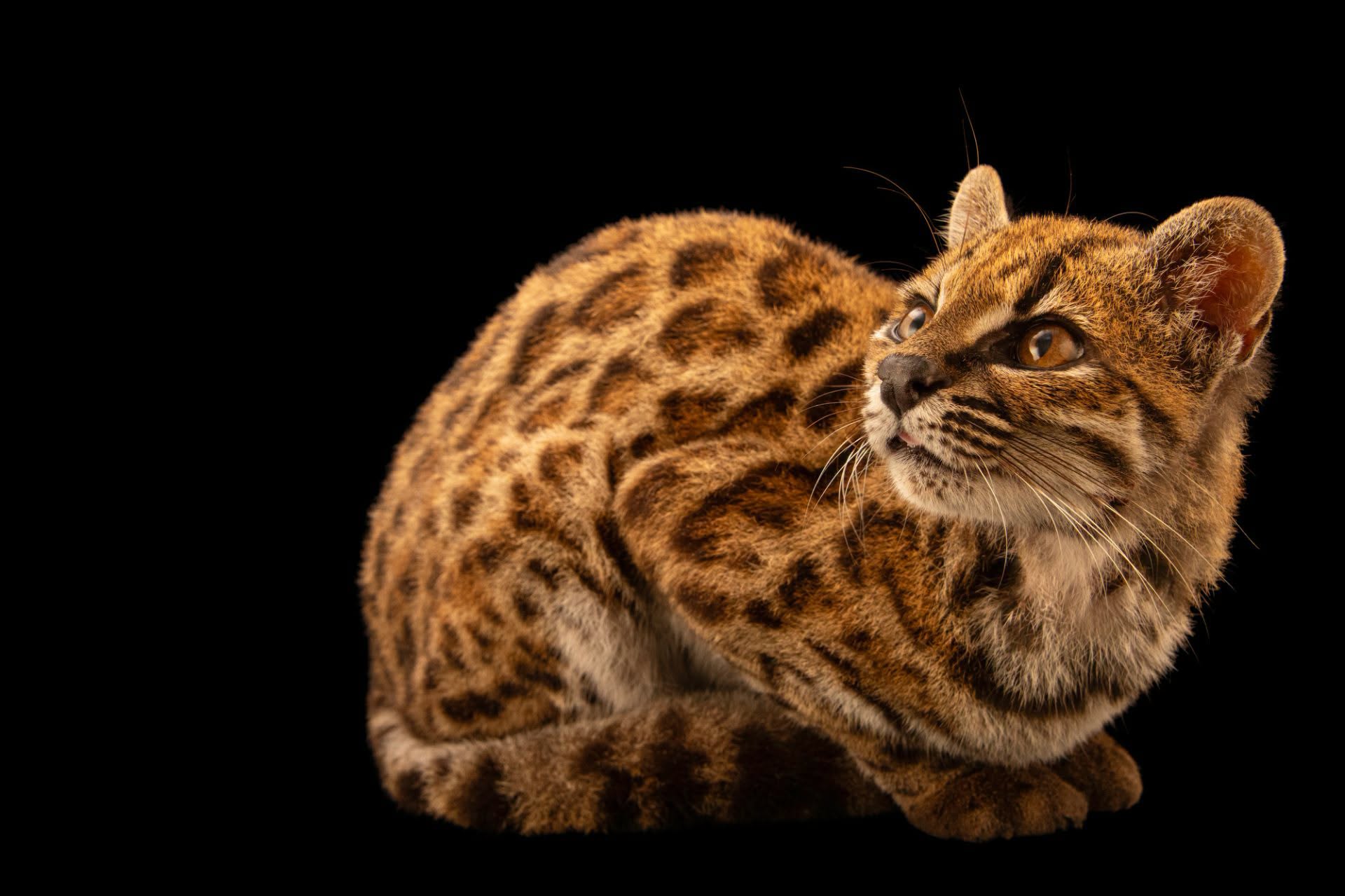
Joel Sartore Photography, shared on his Facebook page #photoark
More Still to Learn
Exactly where these tiger cats live in the wild, what they eat, and any other natural behavior is still a mystery. Trail cameras have been set up to try to capture more images and details about the tiger cats’ habits.
It’s important to learn more about them quickly, before it’s too late. The area where these tiger cats are believed to live is full of mining and deforestation, which could threaten their futures.
And being so cute and small puts them at risk for the illegal pet trade. As adorable as these tiger cats are, the man who originally found Tigrino was wise to realize he did not belong in a house. Wildcats will always be wildcats and belong in the wild, whenever possible.
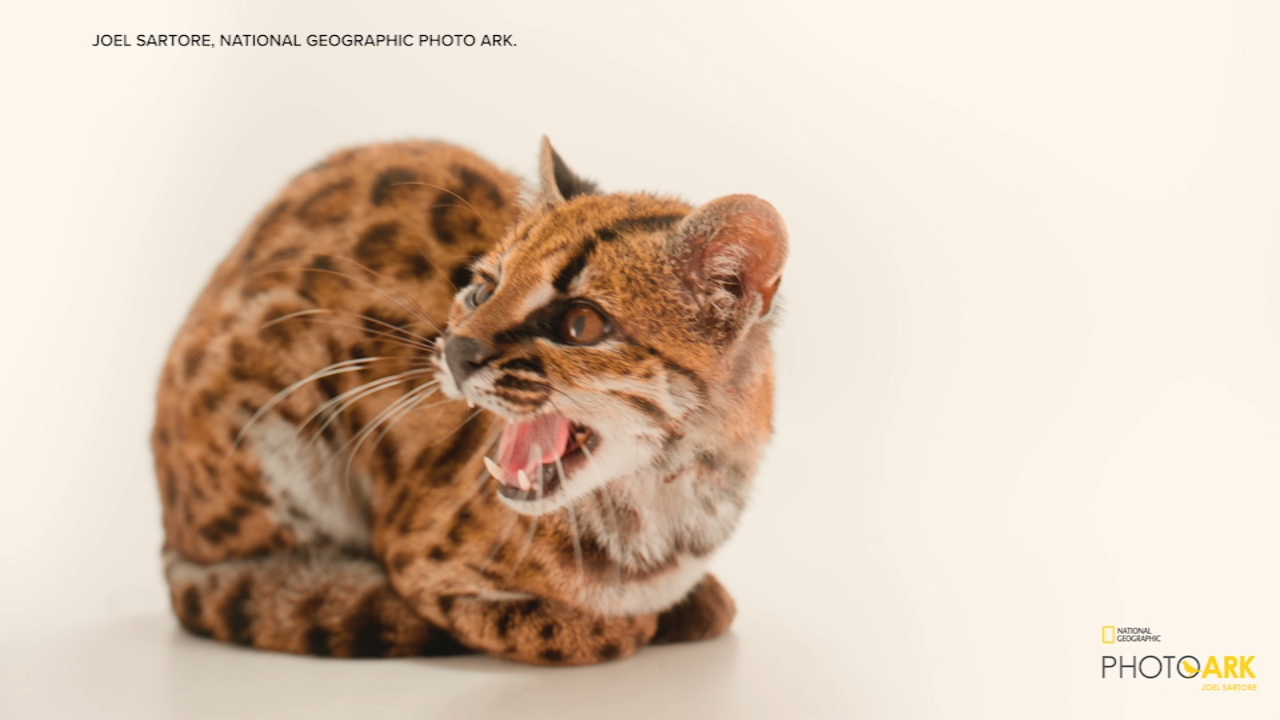
Conservation and Preservation
No one has any details on how many of these tiger cats there may be in those Bolivian mountains or elsewhere in the world, still undiscovered. Revealing all these subspecies of wildcats can totally change conservation efforts.
In an article for National Geographic, Nogales-Ascarrunz says, “Our world is extremely complex. Sometimes we think that most of it is known, that there’s not a whole lot to discover, but in fact, it’s the other way around.”
“Even in the cats, there are things out there that are undescribed, things that people haven’t found yet,” Nogales-Ascarrunz concludes. “So let’s go out and find them and protect them.”
For more details on this discovery, check out the article from National Geographic.