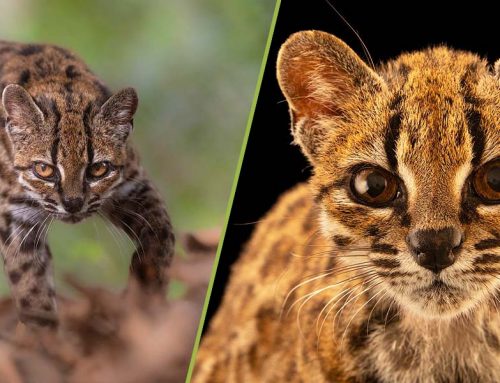


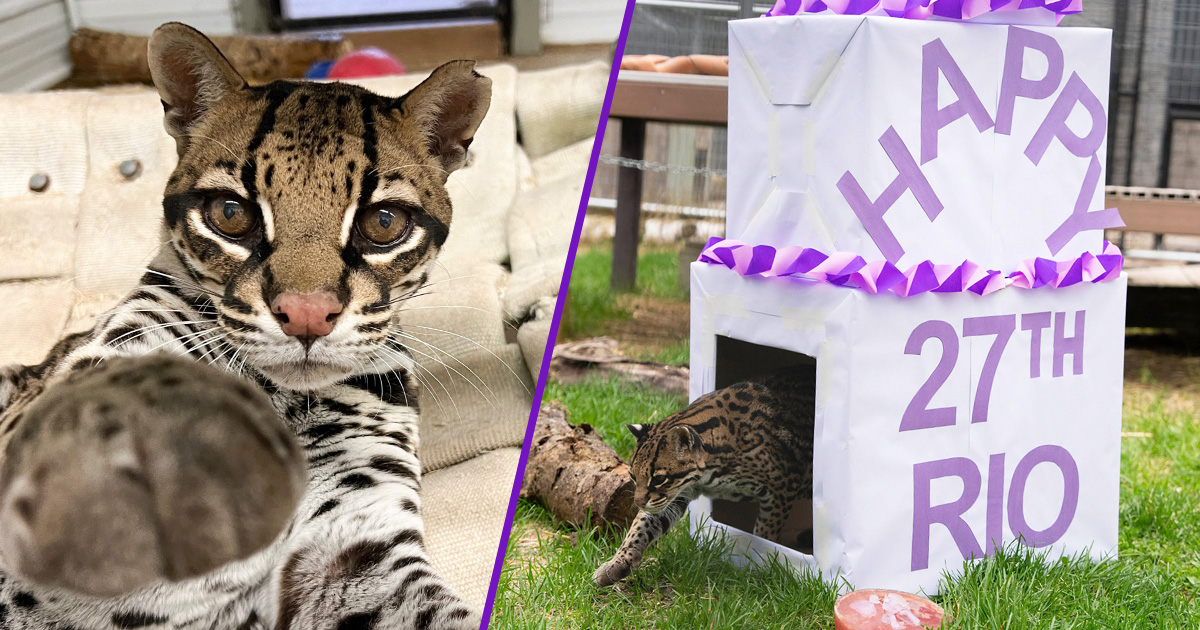
On May 28th, 2026, Rio the ocelot celebrated her 27th birthday at The Wildcat Sanctuary in Sandstone, Minnesota.
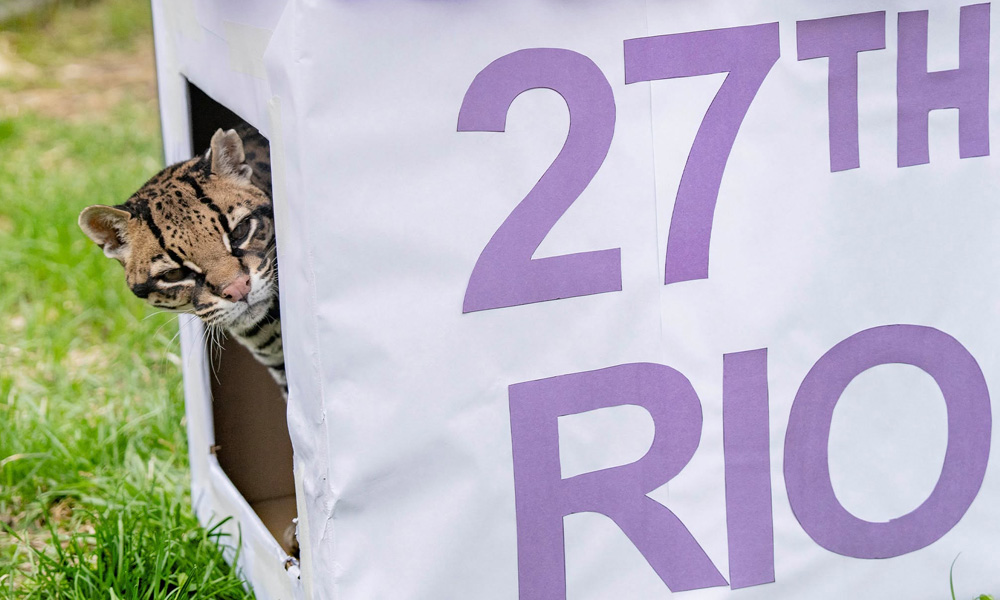
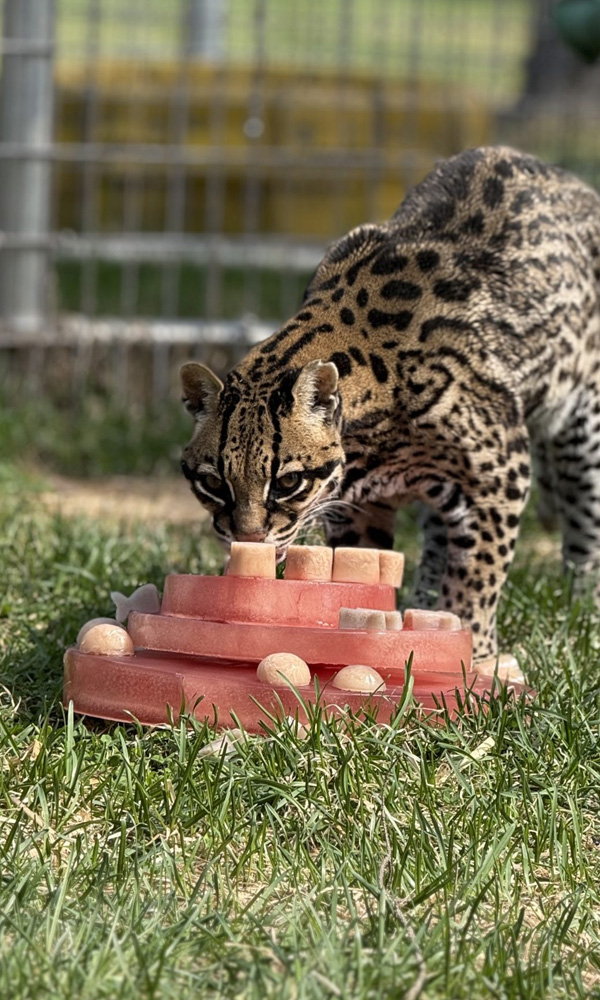
While they average only 7-10 years in the wild—where habitat loss, automobiles, and illegal hunting for their beautiful fur coats make life challenging—ocelots in captivity often live into their 20s.
But 27? That’s the oldest known ocelot in human care!
Rio’s History
Rio was born in 1999 at an accredited zoo, where she was part of the Species Survival Program. Then she moved to a sanctuary in Texas. When that closed down, she arrived at The Wildcat Sanctuary in 2024. Now Rio lives a peaceful retired life.
What is an ocelot?
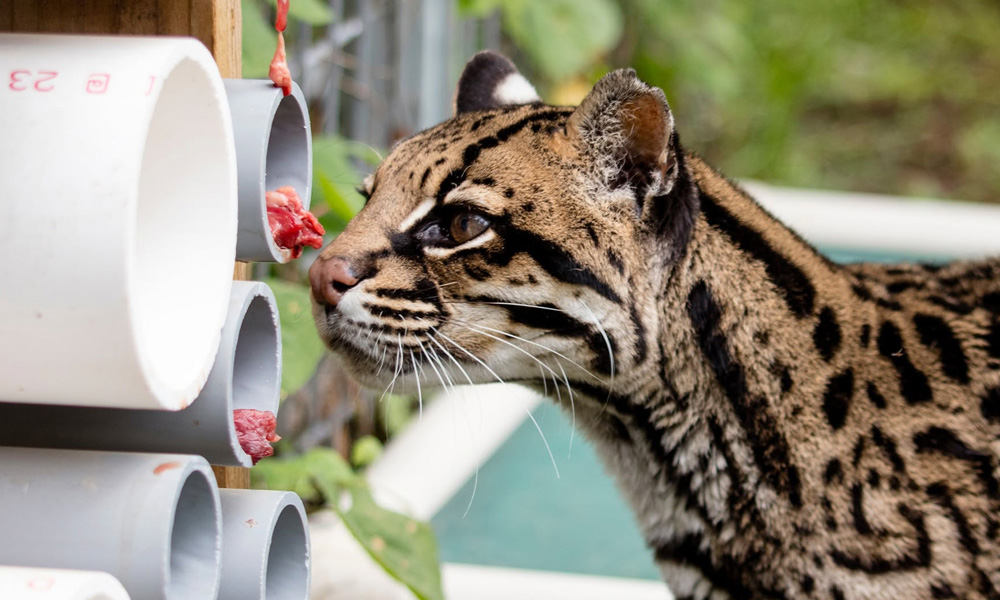
Ocelots are medium-sized wildcats, weighing 25-35 pounds, and have a distinctive appearance with their long noses and spotted pattern. A female ocelot can fiercely maintain a territory of nearly 10 miles, while males defend more like 35 miles, overlapping with females.
Ocelots live in many different environments, from grasslands and thorny scrubland to tropical and subtropical rainforests or costal marshes and mangrove swamps and really thrive in wet, tropical settings. They hunt at night or at twilight and mostly eat small rodents, like mice and rats. But they’ll sometimes take on larger prey like armadillos, opossums, tortoises, lizards, birds, monkeys, and even crabs during the wet season. They are excellent at swimming and climbing. Whatever opportunities their environment offers, they take full advantage.
Still, in Mexico and the United States, ocelots are listed as Endangered.
Why can’t Rio live in the wild?
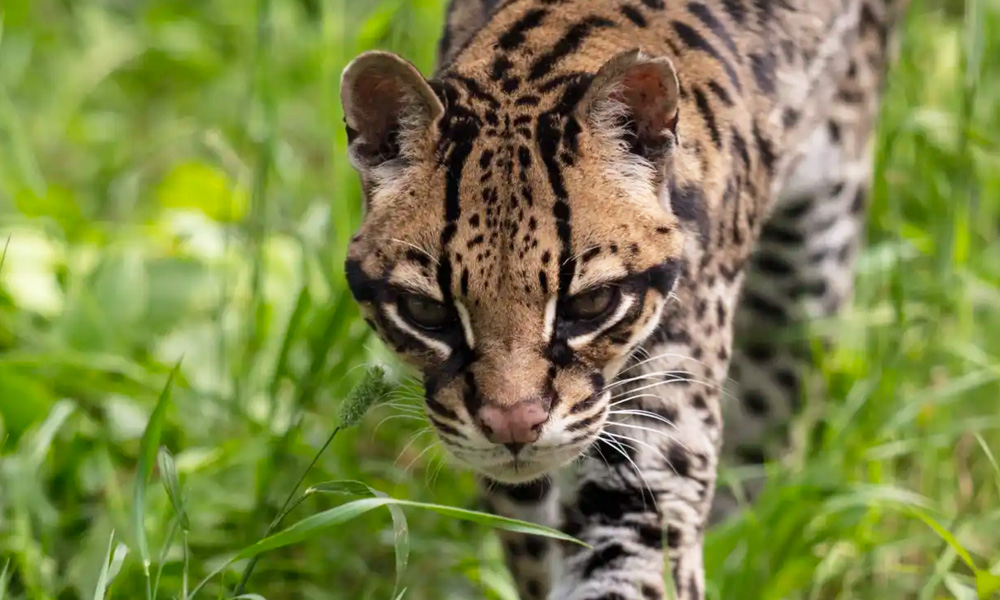
After growing up in a captive situation, Rio is “unreleasable wildlife” and can never successfully run free, but she will have lifelong care at the sanctuary. She enjoys hanging out in her hammock or on a platform to keep track of what goes on around her enclosure, and she’s a big fan of enrichment.
The sanctuary’s website says: “Rio seems to be a very happy girl overall! . . . . She is very vocal and is always talking and rolling in her hammock, belly up. Rio makes us smile every day.”
According to founder and executive director Tammy Thies, Rio loves to chat with the care team with a “deep, grumpy, old-lady voice” to ask for treats.
Rio really loves sunny days and doesn’t miss an opportunity to take a catnap on her favorite hammock outdoors. During the Minnesota winters, Rio also has a heated indoor space where she can stay if she wants.
Are ocelots good pets?
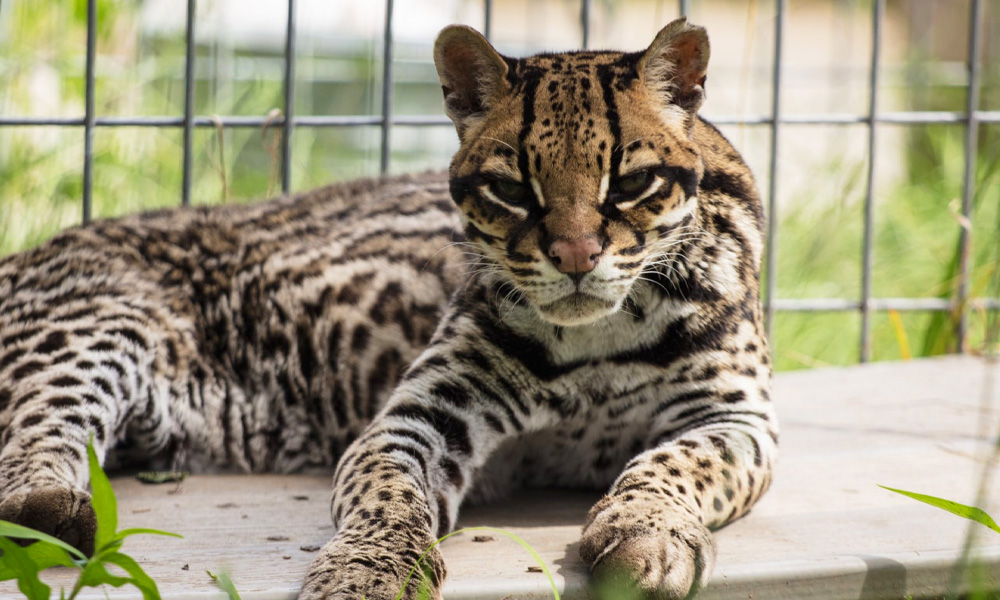
“People see beautiful wild cats online and assume they’d make exciting pets,” Thies says. But besides serious behavioral issues with wild animals in private homes, there is also demanding special care these cats require and deserve, leaving them to be discarded or neglected over time. Ocelots are beautiful but are 100% not pets.
Writing about this milestone birthday for the sanctuary’s website, Thies says, “Every day with a geriatric wild cat like Rio is a gift. She represents not only resilience, but the level of specialized care and commitment it takes to give again wild cats the quality of life they deserve.”
Rio’s 28th Birthday?
Will Rio the ocelot live into her 28th year? The odds are certainly in her favor!
Thies says, “Rio’s birthday is worth celebrating not just because of her age, but because she gets to spend her senior years where she’s safe, respected, and loved.”
The Wildcat Sanctuary is not open to the public, allowing the cats to live in peaceful, natural habitats, but donations are always appreciated toward the care of the 150+ lions, tigers, bobcats, servals, and other cats in their care.
All photos property of www.Wildcatsanctuary.org/riobirthday