

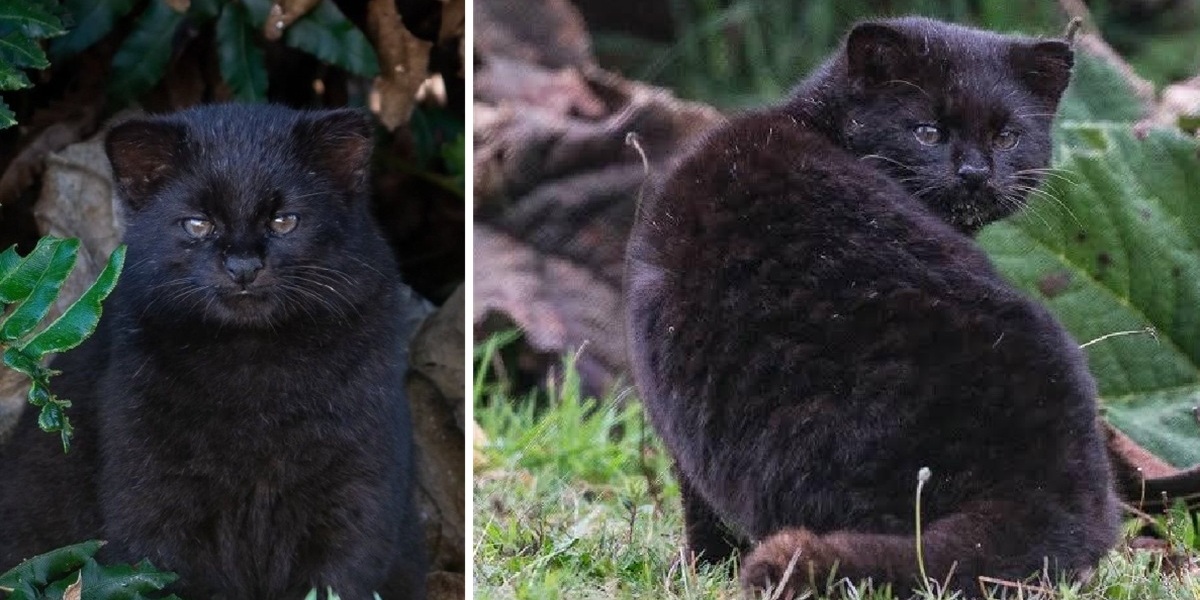
Spotted in the wild—a melanistic kodkod!
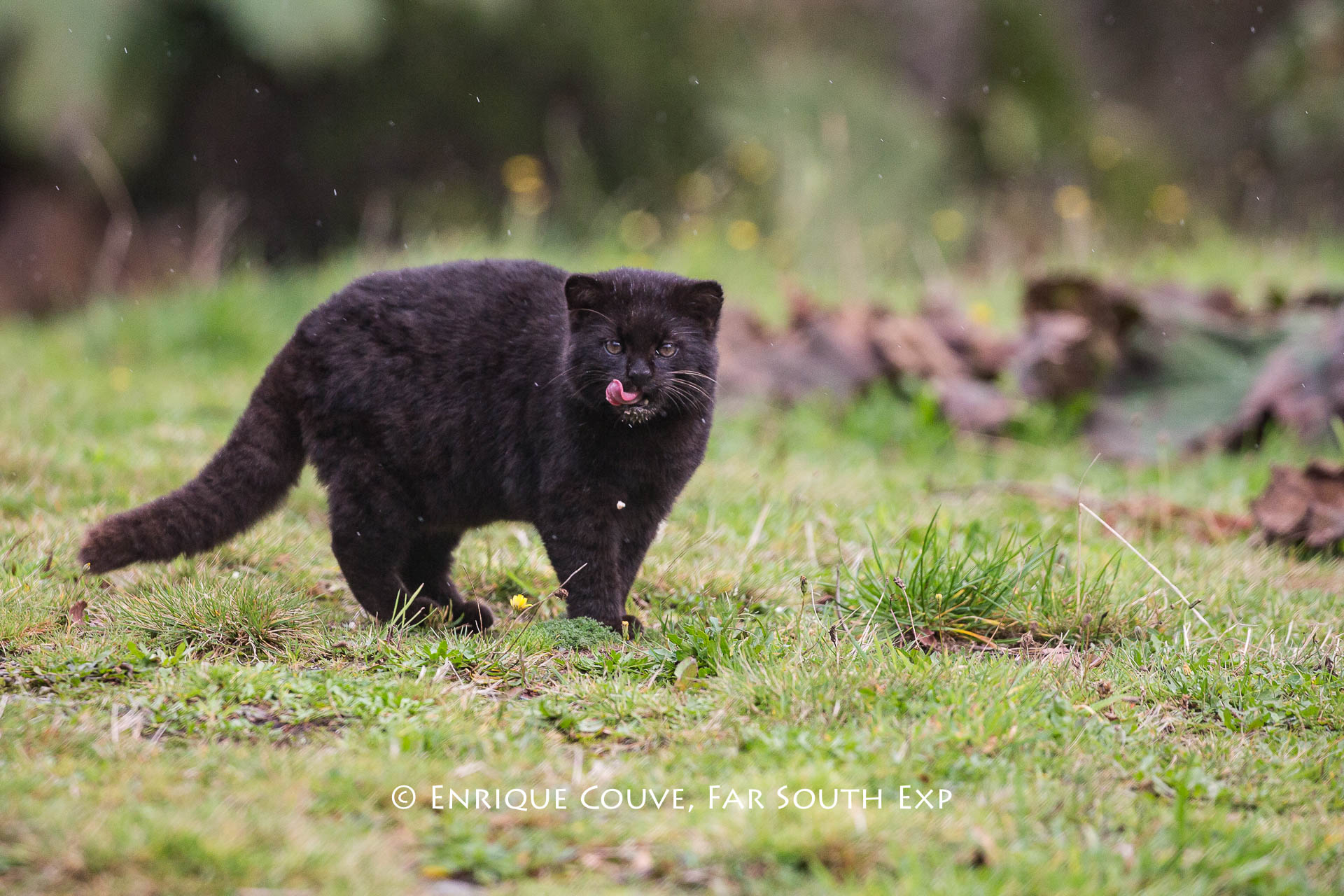
Image from Reddit
What in the world is a kodkod?
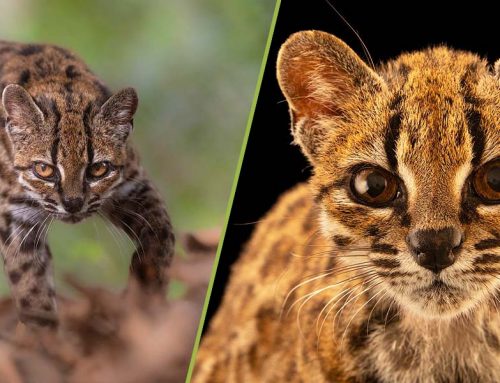
A kodkod is one of the smallest wildcats on the planet. They live in Chile and Argentina. The name sounds like they came out of a science fiction novel, but kodkods are real! The word kodkod is an Araucanian Indian name for this wildcat. But local people call them the guigña. Most of their lives, kodkods avoid humans. They hide in thick forests and are solitary cats. So it’s rare to ever spot one. But a melanistic kodkod? That hardly ever happens.
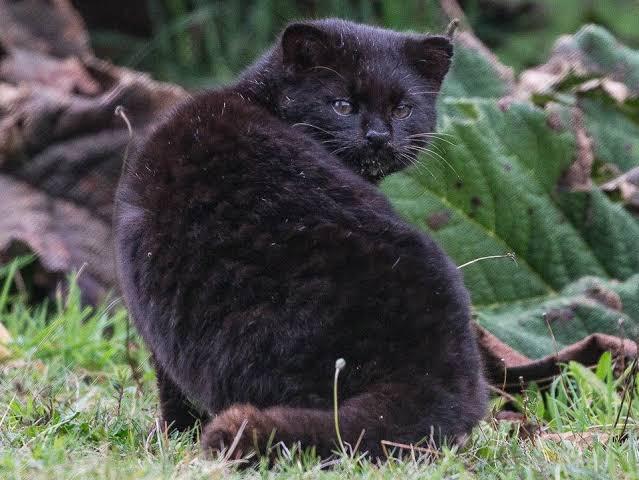
Why Melanistic?
Melanistic simply means it has dark fur. This genetic trait involves a dark black or brown color overtaking an animal’s normal coloring due to a high amount of the black pigment melanin in the fur or skin. In the wild, melanistic coloring is very rare for all cat species. It’s more common to see in jaguars and leopards. Just like those big cats, in the right light you can still spot the splotches and tail rings under the black fur of a melanistic kodkod.
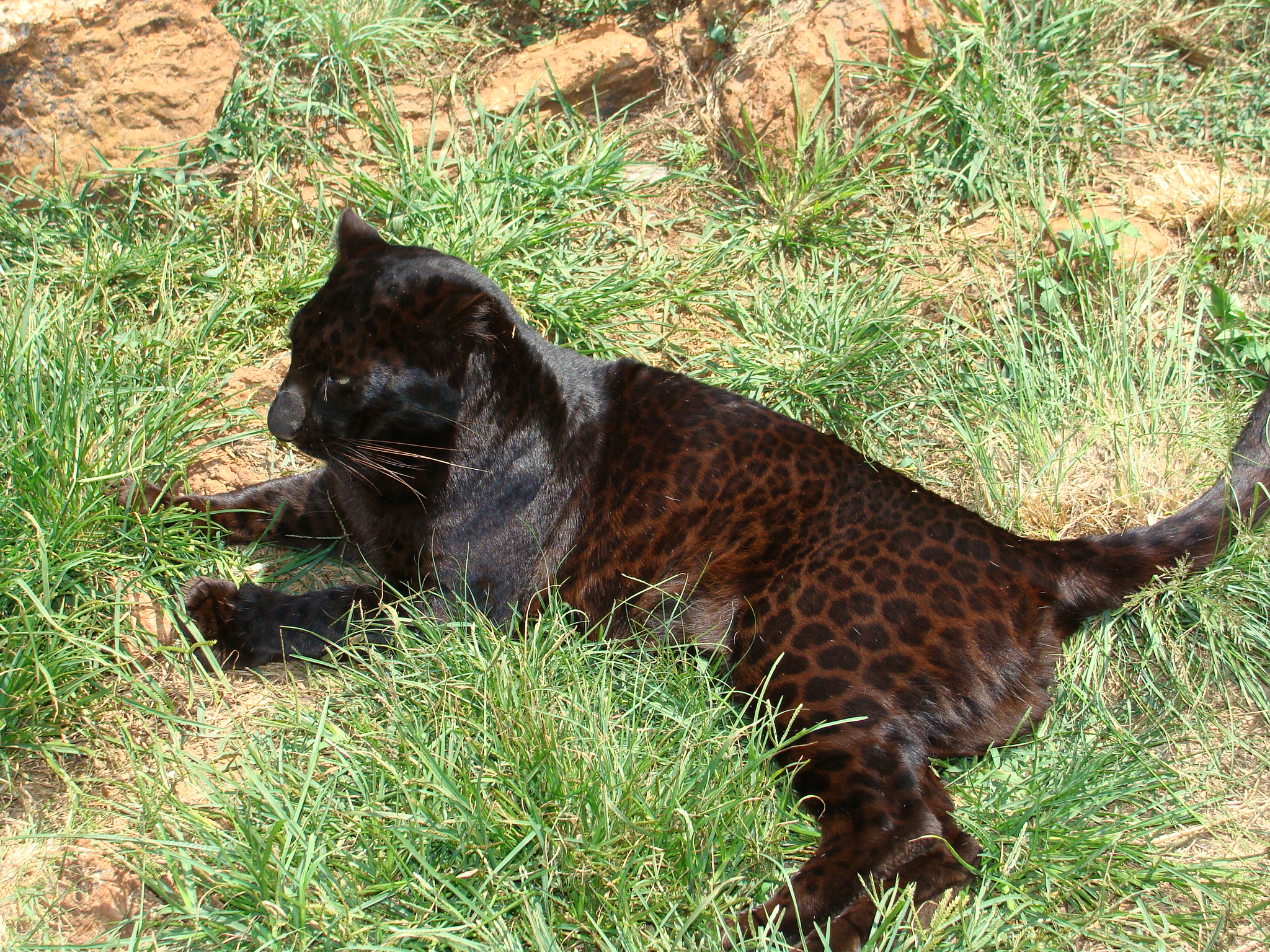
Particularly prominent rosettes on a female black leopard at the Rhino and Lion Nature Reserve in Kromdraai. Photo credit Gary Whyte from Wikipedia
Being melanistic doesn’t make a cat a different species. A “black panther” just means the cat has the gene for dark fur coloring. That black fur can sometimes be helpful for cats hunting at night in thick forest. It’s like they are camouflaged!
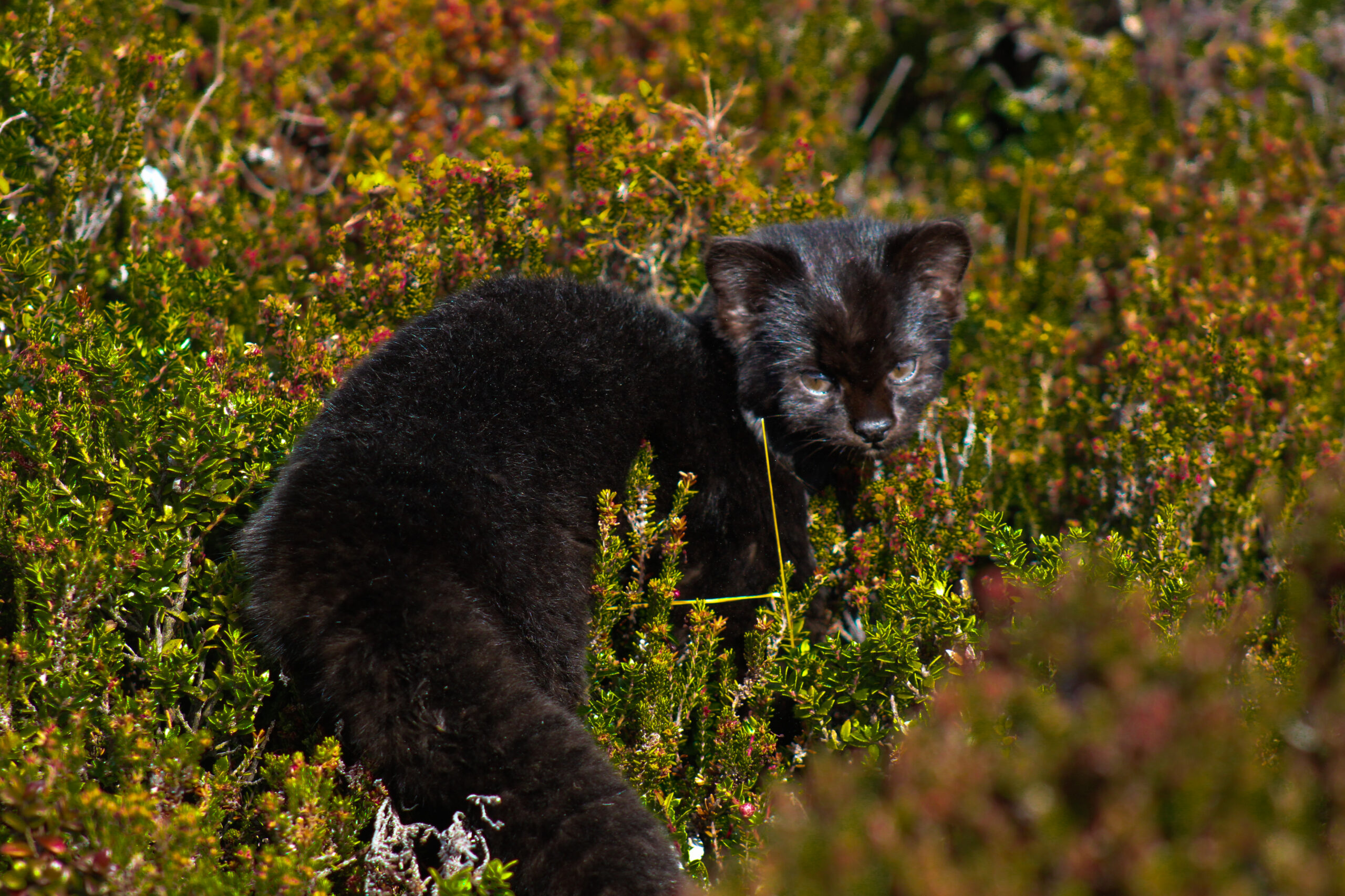
From Wikipedia. Photo credit to Parque Tepuhueico
House Cat Size But Fierce
Kodkods may be cute and only weigh about 5 pounds, but they are excellent hunters. During the day, they mostly hide out. They love dense, scrubby forests. But under the cover of darkness, they creep out for their next meal. Like most cats, kodkods are excellent climbers. They use that skill to escape danger, seek shelter, and scout for prey from above. By dining on reptiles, birds, frogs, and small mammals, they help keep everything in balance for their forest ecosystems.
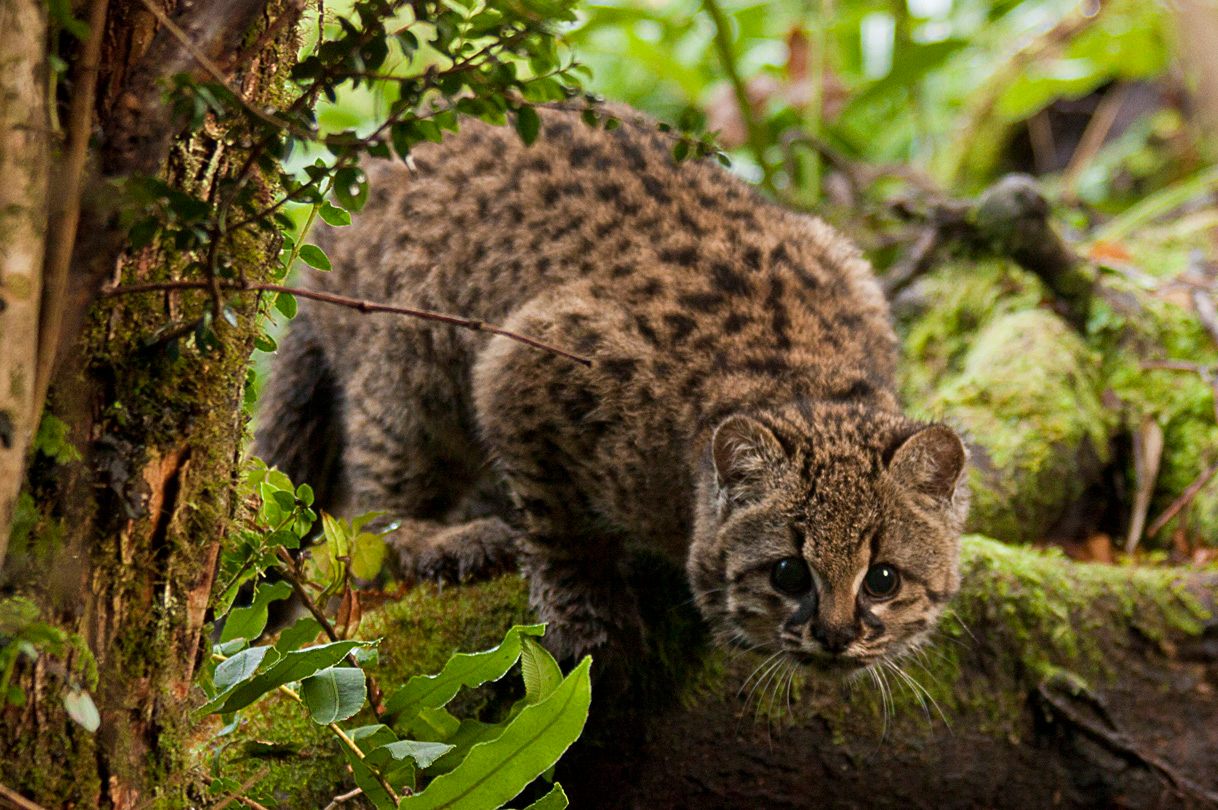
Image from Atlas Obscura. Photo credit to Jerry Laker
Protected But Vulnerable
Kodkods are listed as “vulnerable,” and that gives them some protection. The forests where kodkods live are being lost. Deforestation and humans taking over land is making survival hard. Logging in Chile removes all their hiding places. And takes away their prey. Any kodkods who raid chicken coops for their next meal often face an angry farmer with a gun. The government is providing farmers with predator-proof (and kodkod-proof) chicken coops to help reduce that problem.
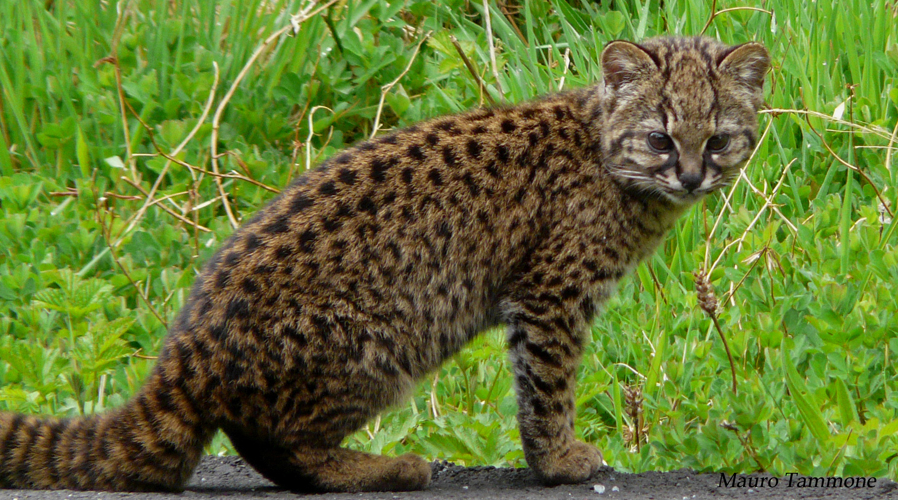
From Wikipedia.
Photo credit to Mauro Tammone
Sadly, humans are the biggest trouble for kodkods. Roads through their land bring the danger of cars. Human farming comes along with protective dogs. For a tiny wildcat, these are serious problems. But local government are working to show how they help to keep mice populations down. Even though they are protected as a vulnerable species, those laws are hard to enforce. Teaching farmers to appreciate that help is important so they don’t view kodkods as a nuisance animal.
Wildcats, Not Pets
Hearing about all those challenges, it’s tempting to think you could just scoop up all the kodkods and bring them home. So adorable and friend-sized! But don’t let that tiny size and cute face deceive you. Just like other wildcats, large or small, they DO NOT make good pets. Trying to tame and domesticate them is not the solution. Kodkods belong in their native territory, even if life is hard there.
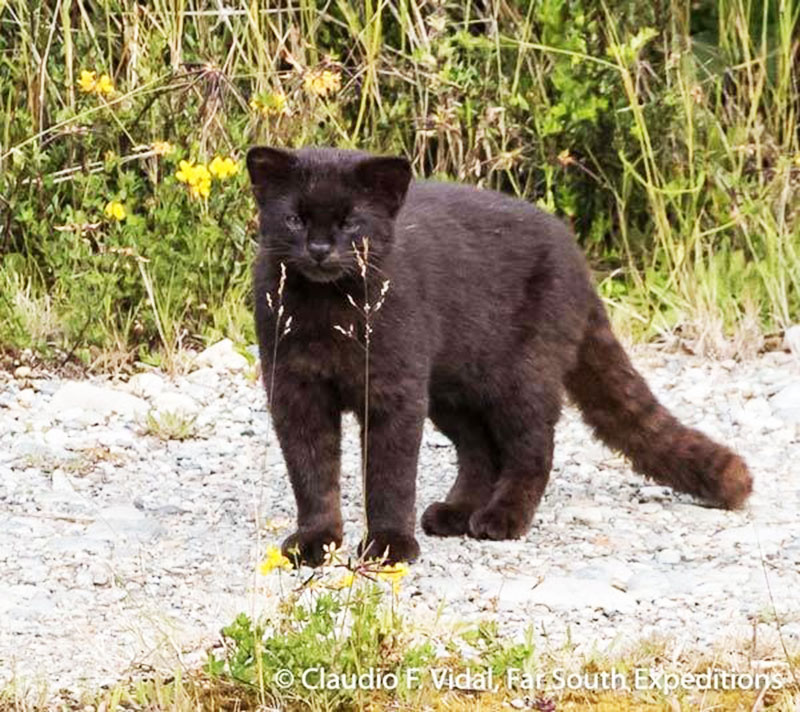
From moddyblog.com Photo credit to Claudio F Vidal
Whether their fur is melanistic black or spotted and striped, kodkods want to run free!